Farewell Purple Coneflowers
Flowers succumb to aster yellows as the yard moves on
The heyday: Flowers
One of the few flowers I planted from seed were purple coneflowers. I knew of them through their medicinal properties (echinacea) and wanted to see the plant grow. They are beautiful flowers with petals that grow downwards with the center raised high in the air.
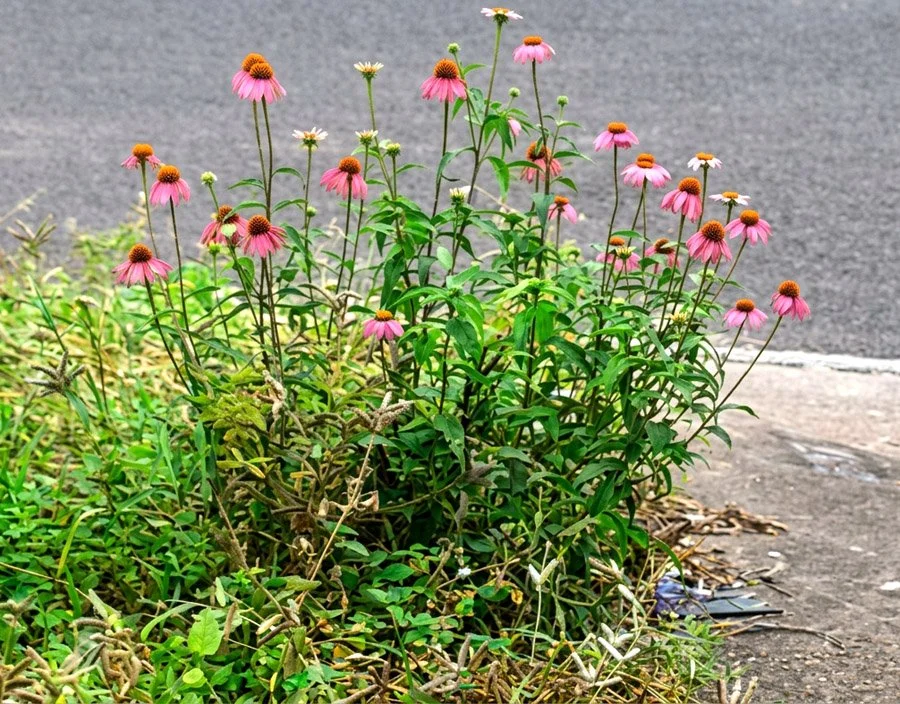
[Picture: Purple coneflowers at their peak]
I started in the backyard by the fence, and they did grow. But that place was a bit too shady for them, and backyard fenced areas allow pests to congregate.
The flowers in the front yard did much better. One year they were starting to put out buds, and a late hard freeze was coming. People were bemoaning the loss of all the young flowers and buds that had come up, and after the freeze passed that fear seemed realized. But my coneflowers believed otherwise. In place of the four to five stems growing before the freeze, more than twenty stems came up. It was the best year for my purple coneflowers.
Doom descends: The disease
A couple years later I noticed something disturbing on the flowers in the back. They were growing green and growing secondary flowers on top of a main flower. It was very disturbing, and rightfully so. They had contracted aster yellows. I cut off the affected blooms, but it wasn't enough—it had gone too far.
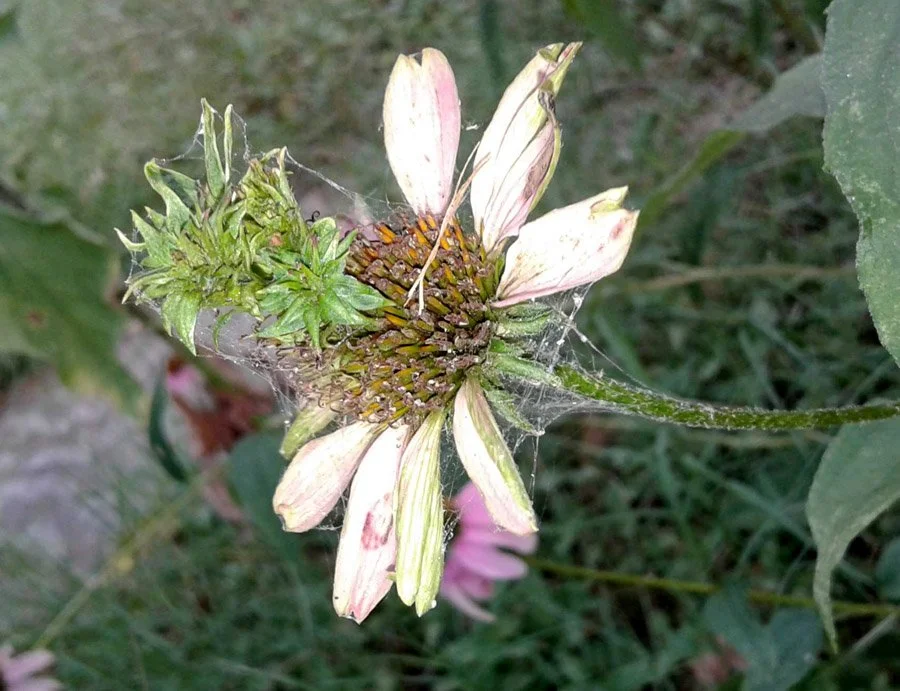
[Picture: purple coneflower with aster yellows causing green blooms from the center. Ignore the cobwebs.]
I noticed a similar stunted green growth on lantana and sunflowers as well. At this point, the sunflowers were really coming into their own in the yard. But the disease didn't devastate them. On the few plants it affected, the disease concentrated in just a handful of branches. Once I cut those off, the plant was back to normal.
Aster yellows mainly affects the Asteraceae family, but this family contains over 32,000 species and has wildly varying manifestations. For perennial purple coneflowers, aster yellows is the end of the road. It invades the whole plant down to the roots. My coneflowers were doomed.
Sunflowers are in the same family but are annuals with thick fibrous stems. Those stems are more resistant to begin with, and after the current sunflowers die their seasonal death, the next year's crop doesn't pick it up. Lantanas are in a different family altogether, so are not very susceptible.
The new ecology wins out
I saw coneflowers growing happily in other people's yards. At the same time, I saw lantanas and sunflowers throughout the neighborhood with telltale signs of the disease. Those neighbor coneflowers were not, however, near other infected plants. Mine were. Lantana and sunflowers were becoming the backbone of my yard's ecology.
So I had to let the coneflowers go. I realized after I pulled the ones in the front, that there was no longer room for them anyway. The sunflowers were completely taking over that side of the yard. And despite their reputation for attracting pollinators, I had never seen a bee or butterfly on a coneflower, never seen a seed, or a young plant growing nearby. The bugs in my yard ignored them; although beautiful, these flowers were not contributing to the web of life. The sunflowers, on the other hand, were constantly abuzz with pollinators and producing seeds for the birds and for next year.
It was a sad parting, but it was time for the coneflowers to go. They had their day, and a wonderful day it was.
