Ice and Resilience
The 2023 ice storm puts Central Texas to the test
Early February 2023 and the day seemed normal enough. Cold but not much below freezing, with some precipitation. I was getting breakfast ready and heard a WHOOSH in the backyard. I rushed out to find that half of a large hackberry on the east side of the yard had fallen to the ground. Ice had accumulated until the tree could no longer bear the weight, and it gave way. Now I had a huge tree filling half of my backyard.
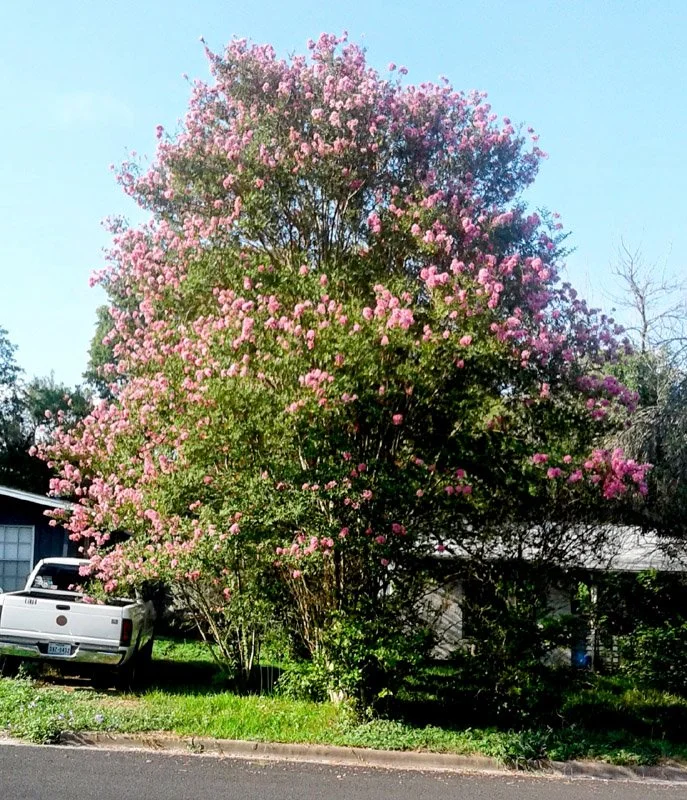
[Picture: my crepe myrtle before the ice storm.]
Later, I went out front to find my very tall crepe myrtle was tall no longer. Almost all the tallest branches had fallen, covered with ice. I could hear 'whoosh … whoosh,' with an occasional crack or pop coming from the yards around me. Almost silent destruction, going on continually. No way to stop it, no way to help, nothing to be done. A tragedy in slow motion, ice becoming heavier and heavier. Walking the neighborhood later, it was the same all over, that relentless, soft sound of loss.
The temperature hovered right around freezing for the next few days, with lots of precipitation. Perfect weather for icy destruction — more branches fell. I discovered that my live oak tree had lost 2/3 of its canopy. It was a sad time. Once the ice cleared, the damage became even more evident. Trees uprooted. Stands of old live oak trees with big limbs littering the ground below them. It seemed the city had lost its trees.
City services were overwhelmed, but finally they came by and took away all the dead tree debris lining the streets. Walking the neighborhood at this point, I could see what the piles of branches had obscured. Life surrounded me — trees that had lost branches but survived, trees that had remained untouched. Even after losing a third of its urban canopy, generating 166,000 tons of debris, the city still had trees in abundance.
The sound of chainsaws filled the air off and on for the next year or so. Some areas are indeed now more bleak and open. Certain groups of trees fared badly, and there's no longer summer shade where it once was.
But what remained did well. The storm did not damage the roots of the trees, and those roots were determined to push new branches back up to the sun. A couple of years later, and the crepe myrtle is almost as tall as before. The wilder places in town still look wild, small forests of trees lining the streets. Resilience wins out.
