Nurturing Butterflies
My yard nurtures butterflies in many ways - through flowers, water, and a pesticide-free zone. But there is one key factor that stands above the rest: larval host plants. That's just what it sounds like: a plant that feeds the larvae, or caterpillars, of the butterflies. You can think of them as caterpillar nurseries. Butterflies may partake of their flowers' nectar, but the key food here is the leaves for the caterpillar stage. And most caterpillars will use only one particular type of plant as food source, their one larval host.
Think milkweed for Monarchs - milkweed is the larval host plant for Monarch butterflies. (I've never had any luck growing milkweed so must be content to watch Monarchs on the lantanas.)
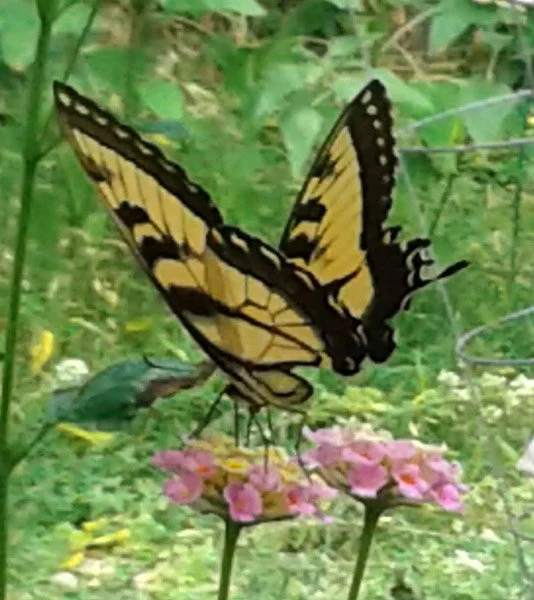
[Picture: Eastern tiger swallowtail butterfly]
Of course, if you’re not keen on seeing lots of holes in your plants' leaves, this may not sound appealing. That's where balance comes in. Sacrificing a few leaves for constant butterfly companionship isn't really so bad, as long as they don't go overboard. And if they like living in trees, you've got the best of both worlds - butterflies without those pesky holes staring you in the face.
Some butterflies are generalists and can thrive on the leaves of a number of different plant species. Eastern tiger swallowtails are generalists, and among the trees they can use are ashes. My neighborhood is full of ash trees, with a big one in my front yard. So the larval host plant issue is painless - I don't even see the damage to the leaves and get to watch these spectacular butterflies. (The much maligned hackberry tree is also a larval host plant for two kinds of butterflies.)
Some larval host plants seem to be intermittent hosts. One year, I found a mass of squirming caterpillars on a sunflower leaf. Before giving into the urge to smash them all, I looked up what they could be. Sure enough, they were butterfly larvae. They totaled that one sunflower plant, but I had dozens of butterflies fluttering around the yard for weeks after. I expected them to lay waste to most of the sunflower plants in the yard, but that didn't happen. Just one or two, and those butterflies haven't returned.
Cleavers were the same. That plant has been a pest in the yard for a long time and takes a lot of weeding. One year, some small moths moved in and took care of the last remaining cleavers plants. I'd love for these moths to spend more time in my yard, but have rarely seen them since.
Then there are the plants that host butterflies and their larvae for months, over and over again, year after year. But that story is for later posts.
