An edible native with a famous cousin across the sea
The discovery
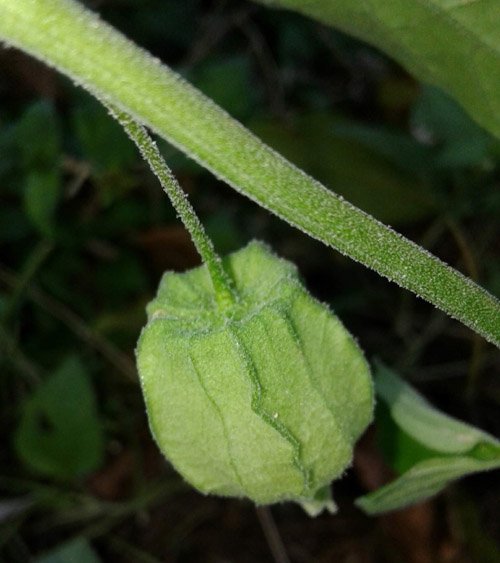
[Picture: ground cherry lantern from my front yard.]
One day, pulling grass as I so often do, I came across an extraordinary plant. It had little papery lanterns growing on the stem, along with small yellow flowers. Inside the lanterns were fruits.
Knowing this had to be something special, I took pictures and researched it. They were ground cherries, a plant gardeners often grow for the fruit. Jackpot! The birds had brought me a wonderful addition to the yard—beautiful flowers, lanterns and fruit!
My front yard had two groups of them: one by the front porch, the other by the curb near the mailbox. I gathered some fruits and left them on the counter to ripen. Tasty right out of the husk.
Over the years, the harvest has been variable. One year I got almost a dozen, other years none at all. I don't see what eats them, but I suspect squirrels partake as well as birds. The plants seem to like shade. The ones near the house are always healthier and produce more fruit, shaded by the large ash tree. The ones by the street grow well but don't produce much fruit.
The cousin
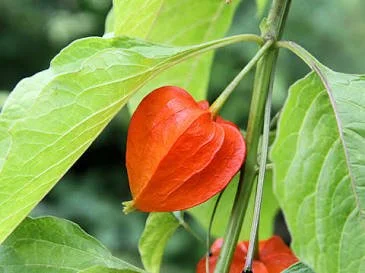
[Picture: Japanese hozuki lantern husk]
Imagine my surprise when I heard the name "ground cherries" in a show about Japan. Surely not the same thing. Well, turned out to be a very imprecise translation, but the plants are very similar. Both in the same genus, both making little papery lanterns.
In Japan, a festival called Obon is celebrated for a week in mid-August. Lanterns are featured from beginning to end. Here, the plant translated as "ground cherries" is called hozuki, or 'spirit light'. It produces bright red, lantern-shaped husks around its fruit, and the plant's lanterns resemble those used during the festival. Outdoor markets with centuries of tradition are held before Obon, with hundreds of vendors and tens of thousands of hozuki plants. People who buy these plants are not only celebrating Obon but are bringing good luck to their homes.
The Japanese plant has been bred for its lanterns, and the fruit is bitter and not eaten. But such a beautiful plant, and what a nice connection across the sea.
