Bird Candy
It's called pigeonberry for a reason
A lot of my yard tends to be a tangle of grasses, mostly rescuegrass and bermuda grass. So I know when I see leaves of a different shape that here's something to investigate. Years ago, such a plant appeared in my backyard. Interesting leaves. I let it be, and it grew spikes of tiny white flowers which turned into little red fruits at the top as the blossoms continued to open farther down the stem.
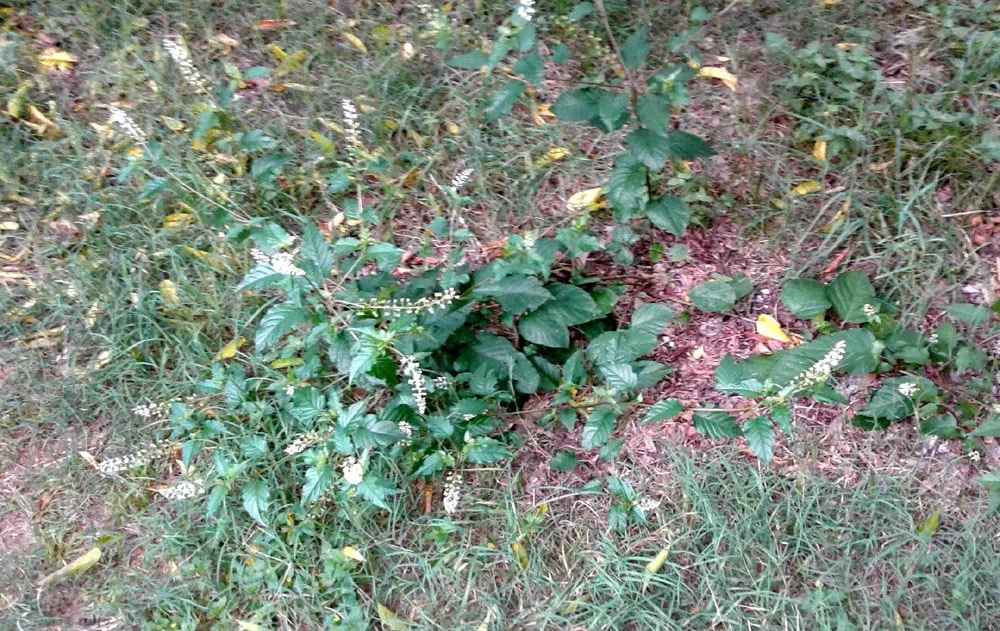
[Picture: pigeonberry with spikes of white flowers]
This was so unusual I knew it was something to keep. At some point, I identified it as pigeonberry. Another plant donated by the birds, thank you very much.
It would die back in the winter, then come back up in the spring. At first, I paid so little attention to it that I'd kind of rediscover it year after year. Oh yeah, that thing. Gave it some water and food, and it carried on.
My pigeonberry's best year was the year of the fallen hackberry. The plant likes dappled sunlight, not full direct sun, and the birds had put it in a very sunny spot. In that new, persistent shade, it grew much larger than in previous years.
The birds really loved all the fruit it produced. A group of mockingbirds made daily visits for a while. A poor, lumbering white-winged dove had trouble. The bird was too heavy to perch on the plant, but the fruits were too high up to reach from the ground. I wanted to go help it get some bird candy, but of course, it would just have flown away.
The next year was the last for that plant, however. Bad drought, punishing sun, day after day. I covered it with shade cloth and watered it every day, but it was no use. The plant did not return the following season. But it was great having bird candy in my yard for a while.
