Pale Dayflowers
Learning how to balance a prolific wildflower
When I first began rewilding, I noticed an unassuming wildflower growing around the edges of several yards, including mine. I let it grow, and later identified it as dayflower or false widow's tears (Tinantia anomala). The flowers are such a pale lilac color that they only reveal themselves in photos at just the right angle and distance.
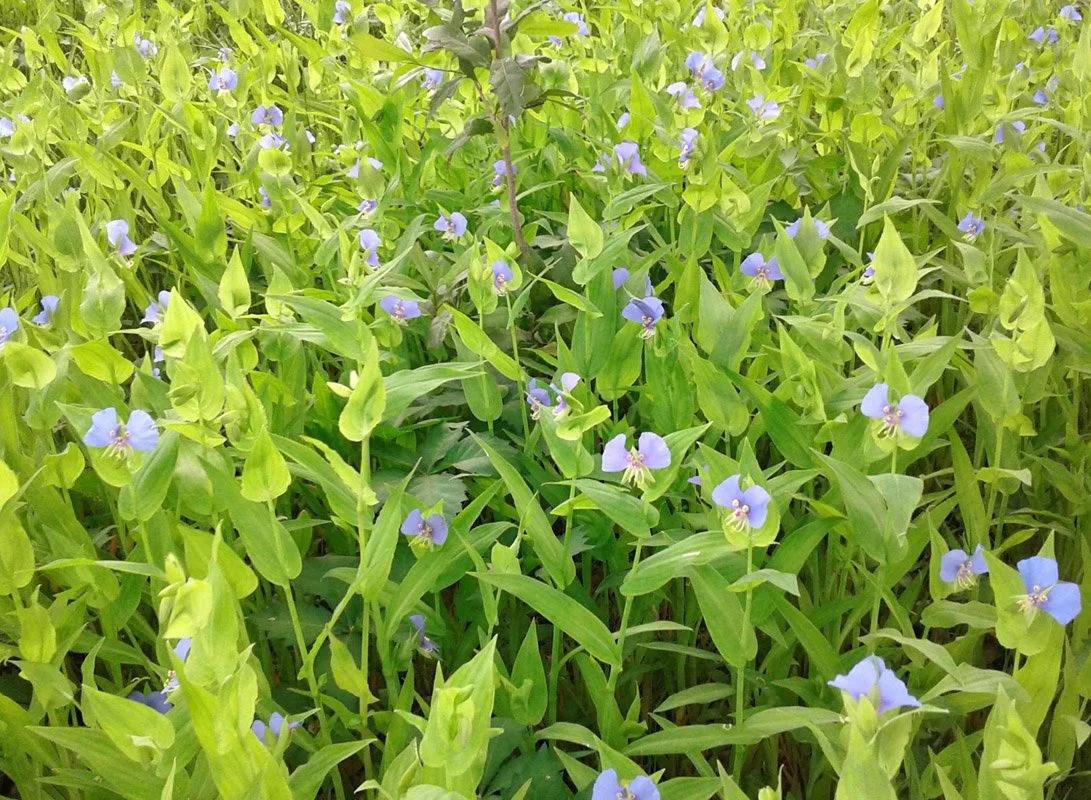
Dayflower is one of the winter annuals, germinating in the fall, thriving through the winter, flowering in spring. Oddly, I've never seen many pollinators, although their actions are evident. Each year there have been more and more seeds, leading to more and more plants. The birds love the seeds, especially the white-winged doves. I've often seen flocks of them in a corner of the yard, pecking away. Clearly conditions in my yard suited this plant, and its numbers skyrocketed.
Out of balance
In the front yard, the dayflowers eventually overwhelmed everything in their path. Plants coming up through the lantanas, around the irises, filling spaces from the curb to the porch. The perennials couldn't get their spring growth underway, smothered by the dayflower thicket. When the dayflowers died back, their dead stems would cover the still-living plants, and I had to pull the debris away just to get them some light.
Eventually, I realized that I had to step in and restore some balance. The dayflowers had to go. There were so many I could only do a bunch at a time, but I got them all before they could set seed that year. I still see the occasional seedling to this day.
An explosion of meadow
The backyard was a different story altogether. Instead of an area densely planted with trees and lantana, as in the front, there was an open field for half the yard, plus uncultivated stretches around the fences. The dayflowers flourished in the best possible way, creating a wonderful wildflower meadow. Pollinators rejoice!
In the back, timing with summer plants was ideal. Instead of interfering, the dayflowers died back before the main groundcover put up its spring leaves. This groundcover, woodbine or Virginia creeper, treated the dead dayflower stems as mulch, nothing to be bothered about.
Same plant, two different situations, two approaches to balance. In the front, masses of dayflowers interfered with the perennials, but in the back, the same exuberance created a welcome meadow.
