Managing Spiderwort
A mysterious plant that is more than it seems
Pretty
Years ago, I noticed a pretty plant growing across the street. It had delicate purple flowers on long stems with a spray of ribbon-like leaves at the bottom. Later I was happy to find it growing in my own yard. It lived its rhythms in an unassuming way at first, near the curb, at the edge of the yard, minding its own business. I soon identified it as spiderwort.
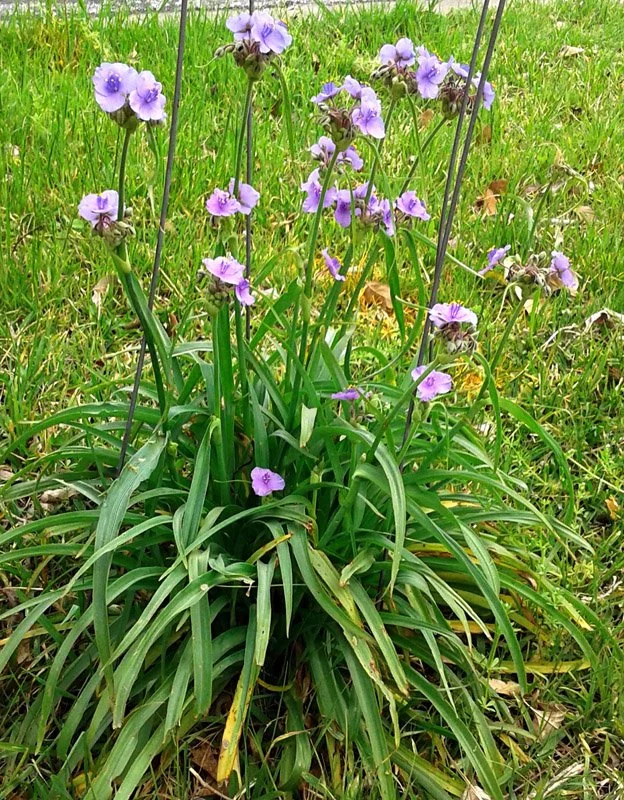
[Picture: Spiderwort in bloom, with tomato cage to repel neighbor’s lawnmower]
Aggressive
Then it began to spread - over to a crepe myrtle close by, then way over beyond the HVAC unit in a corner by a fence not often visited. Still seemed to be a modest little plant, with nice beautiful flowers.
Next it hopped over the fence into the backyard and sprouted up near a red oak seedling. Now this red oak was coming up just a few feet away from the stump of a huge old hackberry that fell on the roof and had to be cut down. The area needed a major tree replacement, and this little red oak was in exactly the right spot.
I remembered reading that all plants should be removed within a certain radius of tree seedlings to give them a chance. This spiderwort was too close, so I set about pulling it out. Easier said than done. I kept digging and digging and found this seemingly dainty plant had a rhizome that I would call a tuber. It was huge, reminded me of a sweet potato. I got it all out, and the tree is doing quite well.
Finding this underground surprise gave me pause about spiderwort, however. I had read and ignored a warning that this plant would take over if left to its own devices. A stretch of yard I passed in my walks was indeed curb to back fence spiderwort. Although it's native, therefore not invasive, I now realized it's the kind of aggressive plant that can prevent other plants from growing, all from underground.
I considered whether it would be okay to allow it to take over a larger section of the yard and decided against. It's not that pretty. Spiderwort could have that space behind the AC, and the two established plants in the front could continue. But I would control any further spread. No spiderworts in my backyard!
Spiderwort info
Spiderwort is a perennial with large rhizomes, but it's related to the annual dayflower in the last post. The flowers are a color similar to the dayflower, and they both thrive in the Texas winter. Although it's a perennial, spiderwort puts up its leaves in the fall like a winter annual, lives through the toughest of winters, blooms in the spring, then dies back. Unlike an annual, the roots remain alive, ready to sprout again the following autumn.
Managing spiderwort required respect for its hidden power: beautiful and modest above ground, persistent and dominant below. With careful planning, it now adds charm without taking over.
