Awash in Cleavers
The sticky plant that won't go away
Cleavers is one of the many winter annuals that germinates in the fall. Although not a native, it's been growing in North America for centuries. Ecologists don't consider it invasive, although it certainly feels invasive in my yard. It serves as larval host plant for a small moth, but these guys don't show up often. Left to itself, it's a major pain.
Long before I began rewilding, cleavers had set up camp in my backyard. Seen by the road or sidewalk, cleavers seems a pleasant little plant. Nice whorled leaves that circle the stem, a soft light green color, and modest growth for most of its lifespan. But just wait until spring.
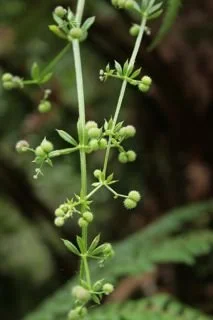
The seeds of this plant are sticky little balls, with a mechanism similar to velcro. Although this isn't the exact plant that inspired velcro (that was burdock), they work the same. The seeds stick to each other, bunching the stems as they climb into the air. Vast numbers shoot up, groups of stems glommed together, and cover every other plant near them. In someone else's yard or a vacant lot, that's actually an impressive sight - such a small spindly plant making such a fuss. Then they die, fall onto the surroundings and smother whatever is there with a dense mat of dead stems.
Cleavers are extremely prolific. When I first tried to control them, I spent several spring seasons filling the garbage can week after week with sticky plant matter. Finally, I learned to identify their winter growth form and began pulling them before they went to seed. Much easier.
Still, any time I think I have eliminated them, more will inevitably pop up. What a seed bank! And of course, they very efficiently stick to the fur of cats and squirrels, finding their way back to my yard. That's the whole point of the stickiness, after all. I will never be completely rid of them.
Cleavers thrive in the area of my backyard that hosts the dayflower meadow, mentioned in a previous post. Although their numbers are now much lower, I can't ignore them. If I do, they'll take over again, and the dayflowers can't compete. Just one more annual chore to help balance my yard.
